Monday, 27 October 2014

Teenage Mutant Ninja Turtles (2014)

Okay, first and foremost, let's get this out of the way: I liked this film. Yes, you heard right - you'll get no high falutin' derisory cineaste sneering from this critic. No siree. In fact watching Teenage Mutant Ninja Turtles - the second attempt to reboot the franchise after the vaguely abortive TMNT in 2007 - made me re-appreciate the value of enjoying films in the company of others. God forbid I should combine film-watching with socialising, but it happened. And it wasn't such a bad thing after all.

I should point out that this 'watching films with other people' malarkey was largely due to the movie in question; coming under the banner of Michael Bay's sidearm Platinum Dunes, it was my friend Adele's voracity for anything Bayhem-tinged that crowbarred me into the cinema, much to my initial chagrin. Why weren't we going to see Gone Girl? Fury, per chance? Hell I'd even take The Maze Runner. But no, Turtles it was. The Transformers-lite teaser trailer had hit all the right buttons for her, and the lady wasn't for turning. Once the film got underway though, it would appear I was for turning.

Jonathan Liebesman's 2014 iteration is by no means a masterpiece, nor is it even great - but as an exercise in ticking the right boxes in the right order for what is essentially a big, goofy kids' film, it's pretty damn faultless. Compare it to The Amazing Spider-Man 2, for instance (which runs with a similar tone on almost double the budget), and it comes off like Renaissance art next to a panicked Etch-a-Sketch drawing. Yes it's silly. Yes it has its flaws. But it's got heart and it's got soul, and for a film that feels the need to awkwardly insert Victoria's Secret product placement into its end credit sequence for no discernible reason, that's high praise indeed.

Despite the basics of the plot being somewhat moot (mutated turtles, a mutated rat, blah blah etc etc), it does throw a few curveballs into the mix by way of having roving reporter April O'Neil (a surprisingly emotive Megan Fox) linked to their gestation/survival, her father being one of the geneticists behind their mutation. Of course he had a partner in kryme (I couldn't resist) with ulterior motives (William Fichtner), who's still pursuing said motives in a quest to ensnare the turtles for their mutated blood. I could go on but I'm boring myself writing this shit. In essence, it's a comic book plot with a kid-friendly bent, ridiculous but perfunctory with enough twists to keep the kids amused and the adults engaged (except for when Shredder says he wants to 'dine on turtle soup' - you'll roll your eyes, but give the film a break; it's for the kids, not for you).

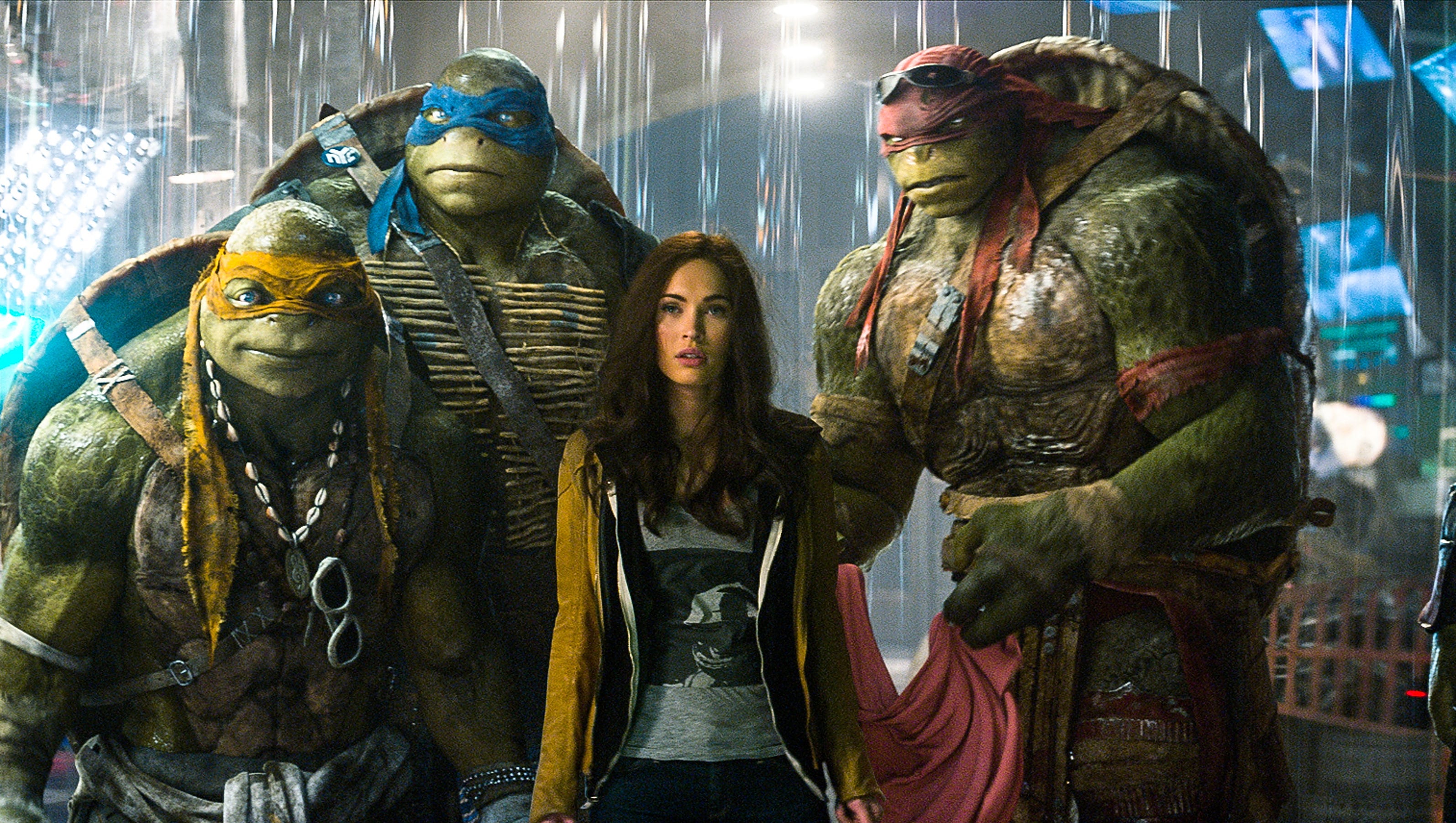
This kid-friendly charm extends beautifully to the turtles themselves, their newly-minted CGI incarnations proving to be characters you can emotionally invest in (that said, avert your eyes during their childhood training sequences - Michaelangelo (Noel Fisher) break-dancing to Hollaback Girl is THE scariest thing you'll see this year). They're akin to Bay's Transformers in that respect; no matter what you may think of the films themselves, it's hard to deny Bumblebee and Megatron have far more charisma than LaBeouf, Fox, Wahlberg et al. It's to Teenage Mutant Ninja Turtles' credit that Will Arnett (as O'Neil's trusty cameraman Vern Fenwick) manages to keep us interested in the human element as well as the CGI wizardry - well, just. None of the actors are stretched by any degree, but a few decent gags and a zingy (if slightly cringey) script keep things afloat, the pace never letting up but never getting too ahead of itself either. In an age where action films are seemingly vying for your attention at every spare moment, it's refreshing to see a film placing a modicum of emphasis on character development as well as the next explodey bit (though you may be surprised how few explosions there are for a Bay-produced film - hand-to-hand combat is the pizza order of the day here, though quite why Shredder had to be exo-skeletoned up to the tits is beyond me).

It should be easy to mock Teenage Mutant Ninja Turtles as many of the broadsheets already have, but I'm afraid I can't - when you've genuinely enjoyed yourself for an hour and a half, it'd be a betrayal to all involved if I was to scoff in its face, brushing it off as forgettable frippery. Though in some ways it is; this isn't a film trying to reinvent the wheel, in fact it's the umpteenth film to utilise the old "I'll infect the city with a virus because I'm evil and shit" gambit, so much so that we spent a fair chunk of time after the screening thinking how many other recent films have used it as their MacGuffin (X-Men, Batman Begins, The Amazing Spider-Man - do send other answers in on a postcard, please). But its potential forgetability is routinely saved by the chemistry between the four green leads, each of them so solidly defined in their predetermined roles (the leader, the loose cannon, the science geek, the comic relief) that you remember why everyone had their favourite growing up. They're designed to let children see part of themselves in each of them, children both big and little... I know I know, this all sounds suspiciously rose-tinted. Fuck it, it probably is. But Teenage Mutant Ninja Turtles has, for this critic, breathed fresh life into a franchise that never got the chance it deserved first time around. Leave your cynicism at the door and enjoy the ride - you might not love it, but you'll be hard-pressed to say you weren't entertained. And that's good enough for my money.


Monday, 20 October 2014

Peaches Christ's Bearbarella

Not for the first time in my life, I was surrounded by scantily-clad males; their thick make-up, pore-clogging body glitter and intimately-placed microphone packs forming the apex of my evening. With my miner’s headlamp turned on full, foraging under the immense wig of Lady Bear herself, my shaking fingers desperately fondling the thin stem of her headworn mic in a vain attempt to get it to clip around her ear, I paused for a moment to consider the words of David Byrne: how did I get here? My God, what have I done?!

Such was my Saturday evening on the 11th October in the Year of Our Lord Twenty-Fourteen. I wasn’t in the bowels of a Canal Street flesh pit, nor off on a whistlestop tour of London’s Torture Garden; I was lost in the green room for the Manchester finale of Peaches Christ’s Bearbarella, a bespoke theatrical cinema performance taking cues from Roger Vadim’s Barbarella, her one-hour pre-show taking a captive audience to new highs (and lows) of camp excess before a screening of Vadim’s insane 60s sci-fi spectacular. And as already noted, this was the second time I’d worked with the legendary San Francisco drag queen – otherwise known as Joshua Granell – armed with her cohorts Hugz Bunny (Ric Ray) and Shemantha (Sam Sharkey) under the production steerage of Bren O’Callaghan, a man so passionate about the project that he battled influenza for the entire three-date tour (both Belfast and Glasgow bore a brute force attack from the be-Barbed Christmistress) before allegedly collapsing in a doctor’s surgery minutes after the wrap party. He hasn’t been back to work since. Drama queen, much?

It’s inspiring in many ways that Cornerhouse – ever the bastion of chin-stroking director Q&As and gallery exhibitions that by their very nature can struggle to find an audience – can still put on a show like this without batting a fake-lashed eyelid. Coming under the banner of the BFI’s Sci-Fi: Days of Fear and Wonder season, it was in many ways a ridiculous show that outstripped its predecessor, 2010’s Midnight Mass, for sheer filth and debauchery. But when paired with the film, it all slotted into place; Vadim’s absurd but visionary sexual adventure is in many ways sillier than the pre-show that came before it, its high camp values a perfect match for the performance that Peaches and Co. brought to the stage.

An array of superbly-outfitted Manchester drag queens filled out the cast of characters, from the blind angel Go-Girl (Cheddar Gawjus) to the lamé-caped Dildongo (Anna Phylactic), all expertly choreographed by the Ultra Violets. To see all this unfold from my vantage point behind the mixing desk, headlamp’d up to the nines, adjusting mic levels under the watchful eye of señor Sharkey (a man who could well be considered the ultimate calm at the centre of a very crazy storm) was nothing if not a pleasure. Any nerves I had dissipated as soon as the curtain came up on Peaches, her fierce opening song kicking off a succession of equally fierce lip-synced numbers, strung together by the lurid sexual exploits of Lady Bear (whose real name remains a deliberate mystery). There was even time for some audience participation in the form of The Orgasmatron Challenge, though I guess the less said about that the better; what happens with Peaches, stays with Peaches.

Whether it be for Cornerhouse, Abandon Normal Devices or for HOME in 2015, working on these insane events is one of the reasons I love my day job. Unplanned emergencies, such as getting stage lighting to work with less than three hours to go until showtime, are all part of the fun; any stress falls by the wayside when you see a 300-strong audience from a myriad catchment zones having an absolute ball on your watch. Gushing my words may be, but for good reason – I loved it. And I’ll shout it from the roof of my blog for all to hear.

Long live Peaches. x

Wednesday, 27 August 2014

Locke

First published on Northern Soul, Aug 2014

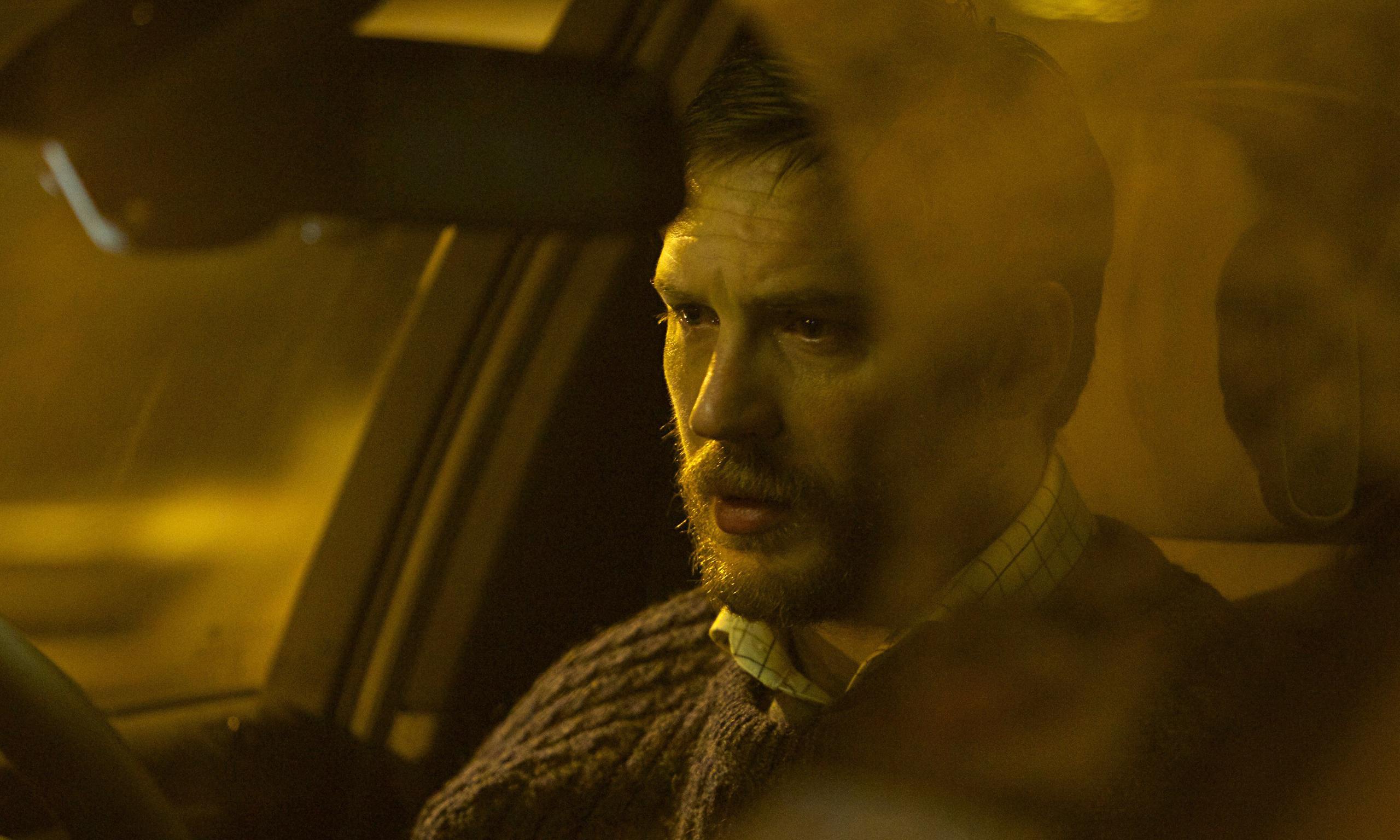
Locke. Or "Tom Hardy in Welsh Accent Controversy" as some may deem it after the opening credits. This is a film about a man driving a car from Birmingham to London. That's it. Nothing more, nothing less. So when we hear Hardy's first mumbled utterances delivered with a thick Valley brogue, it's such a far cry from his Bane or Bronson (or any other character he's thus far proffered up) that you can't help but smile. You know you're going to be stuck with this accent for the full duration, but if anyone has the chops to pull it off, Hardy does. And while Locke may not be an outright masterpiece, it's a beautifully constructed, tight-as-a-drum tinder box of tension and too-close-for-comfort emotional wrangling that sucks you in and leaves you drained.

Not only is this a film about a man driving a car, but who would have thought the workaday worries of the concrete industry would make for a nail-biting plot device? Adultery sure, that makes sense. Locke sees fit to deal with that too. But concrete? Most would consider that too tough a nut to crack. C6 tough, to be precise (a concrete joke for you there - any builders reading will be LOVING that). To director and screenwriter Steven Knight's credit, the perceived mundanity of the subject matter gives him the opportunity to focus on just what Hardy does with it; there's plenty of great actors who could have given this film a shot, but Hardy graces the screen with an effortless magnetism, without ever spilling over into a forced rage or an over-stretched monologue ('too much acting' as Bradley Pitt might have it).

Having driven away from a massive concrete pour for which he's the foreman responsible, Ivan Locke (Hardy) calls his family to tell them he won't be home for the evening. Turns out he's quite the dark horse, having had a one night stand several months earlier which unfortunately has led to pregnancy. The standee in question, Bethan (Olivia Colman), having gone into premature labour, is only ever heard on the other end of Locke's carphone - her name viewed on a dashboard screen that puts up a pretty robust fight for a supporting actor credit with the amount of calls it receives. With this potential catastrophe in one hand he juggles his colleagues in the other, tempers flaring as he's accused of having taken leave of his senses with so much at stake back at the building site (it's the biggest concrete pour in Europe, so it is). You don't have to be a genius to join the dots from here on in, things getting pretty damn heated inside Locke's SUV; his wife finds out the truth. His job is on the line. He might not make it to the birth. He's up shit creek, but hey - he's got a nice car for a paddle. Every cloud and all that.

Now Locke isn't the first film to focus on a single leading man for most (or all) of its running time. Cast Away, Buried and 127 Hours all put up similar fights, but where they differ (especially the latter two) is the expected flights of fantasy to break the potential tedium of having one actor carry an entire film from beginning to end. Locke doesn't do that. Not even close. In fact it's so fixed on Hardy and his masterclass in restraint that, save for the establishing and closing scenes, Knight shoots almost all exterior shots in soft focus, car headlights and motorway signs both a proverbial and literal blur for Locke and the viewer, forever drawing our attention back to his plight as he wrestles with dilemma piled upon dilemma. And while concrete might not be in everyone's catchment zone of expertise, adulterous behaviour may well be. It's in this area that Locke excels, drawing palm-sweating realism from a very difficult situation that may prove to be too uncomfortable for some palettes.

Knight may have poured some seriously sturdy foundations for Locke to stand on, but this is Hardy's show all the way. His Bronson may have been crazed and his Bane grandstanding, but with Ivan Locke he gives us a man you may not agree with, a man you may possibly hate, but you can't help but feel sorry for. You want him to win, even if his winning means losing everything. It's a complex, difficult, nigh on impossible role, but Hardy shows us exactly how it's done. And with a Welsh accent too. Now that's talent.

Wednesday, 13 August 2014

Transformers: Age of Extinction

Ah, Michael Bay. How we salute you. Champion of circling helicopter shots, wind machines in faces, hot female extras, low camera angles when bad guys are getting out of cars et al. In fact see this to clock what I’m referencing, not that you really need reminding. But it’s timely to see just how naff most of Bay’s films really are, in particular his Transformers trilogy, when you strip them down to their component parts. I love a good blockbuster, but Jesus… at least SOME sense of narrative thrust is requisite to get you hooked, and keep you hooked (see Edge of Tomorrow for a recent example of how big silly filmmaking should be done). Unfortunately, poor Mark Wahlberg and Stanley Tucci (as Stanley Tucci) can’t hold up what is a crumbling, deafening, metallic mess of a movie (though the explosions do sound awesome, thanks to Leeds Everyman and their beautiful sound setup that left my bones shaken and bum rattled).

It’s not for lack of trying that Age of Extinction fails. But in the great pantheon of films that have had ample money thrown at the screen only for much of it not to stick – Emmerich’s Godzilla, Raimi's Spider-Man 3, even the recent The Amazing Spider-Man 2 (what is it with Spider-Man and his cinematic failures?), Age of Extinction has now waded into the fray and staked its place. It’s not even as if I hate Bay; I don’t. The Island, whilst hardly original is great fun, while his last offering Pain & Gain is – in Bay terms – a modest indie comedy that's far funnier than you might dare admit in polite Guardian-reading company. Maybe it’s because both of these films have been relative failures at the box office that he and his studio backers felt inclined to stick to what works, at least in terms of revenue recoup (audience taste be damned). And so we end up with this trundling, energy-sapping onslaught of robots fighting people, robots fighting robots, robots fighting dino-robots, robots robots robots... and on and on it goes, for over two-and-a-half life-draining hours.

It’s not even worth expanding on the plot, save to say Wahlberg – an ‘inventor’, likely inventing synthetic steroids for his bulging bi's and tri’s as well as his labour-saving robots – stumbles across Optimus Prime in an abandoned cinema (of course he does). He tries to hide him on his farm because America doesn’t like robots anymore. And to be fair, who can blame them? After supposedly ‘saving’ mankind in their fight against the Decepticons, the Autobots went and wrecked half the West Coast in the process, and no doubt sizeable sections of other countries too. A bit like Superman did to Metropolis in Man of Steel. But he’s an all-American hero. So the US approve of aliens destroying their city, but not alien robots? That’s just racist.

I remember going to see Transformers: Revenge of the Fallen in IMAX, and likened it to being hit over the head by a giant frying pan for two and a half hours. Age of Extinction starts out somewhat less aggressively, but by the midway point Bay’s giant frying pan of doom is in full swing. And as noted, this would all be fine if there was something semi-decent going on by way of the script, or at the very least a coherent plot (by the time we’re in Japan and the Dinobots show up, we’re left wondering why we were shown a Dinobot in the Arctic in the opening sequence, and not in Japan – call me old-fashioned, but it’s the little things that matter). But as Bay has so often displayed, fripperies such as script and plot fall by the wayside when you’ve got cars, robots and buildings to blow up. And if any film had more than its fair share of wanton explosions, it’s this one; pyromaniacs may find themselves suppressing a proverbial wetty by the time it reaches its orgasmic, explodey climax.

I offered an olive branch to Need for Speed in my last review, suggesting that if you’re after anything in the way of plot or a decent script, you’re watching the wrong film. But I may have been too hasty in my assessment after having endured this throbbing slice of Full Metal Bay. It can’t be too much to ask for when watching a film, any film, no matter how low brow it may be perceived to be, that it cover the basics. Some of the most silly explosion-fuelled movies imaginable have taken on the mantle of modern classic, simply because they offered up characters to give a shit about: Die Hard. Predator. Speed. Okay I confess, Speed is a personal guilty pleasure with some admittedly shocking scriptwriting, but anyone who doesn’t care when Jeff Daniels pops it at the hands of Dennis Hopper’s home-rigged explosive device is flat-out lying. Hell, even Top Gun had memorable lines and characters you could empathise with, and that’s practically Bay’s Bible. It’s as if all the camp fun and burning 80s machismo that made the Die Hards and Predators of this world so much fun has been sucked out of Bay’s fourth take on the Transformers mythos, replaced by stock grunts, simpering leads and clanging racial stereotypes, the sum of their parts having less humour than an American border patrol guard (I’ve seen their faces. They don’t smile. Ever).

The only reason I can think of to like this film is that it will make a lot of money. Money that will go towards smaller films that otherwise might not have been made, had it not been for the box office takings that a Bay film unceremoniously generates. Think of it as giving to charity – helping out those films less fortunate. In fact go crazy. Buy the Blu-Ray. Buy the limited edition box set in the shape of a Dinobot scrotum. Anything you can spare will be greatly appreciated by films actually worth your while.

Please, give generously.

Thank you.

Need for Speed

Any film that takes its cues from Vanishing Point can’t be so bad, right? A perennial 70s counter-culture classic, influencing everything from Smokey and the Bandit to Death Proof; you’d like to think any film that uses it as a template is off to a decent start. You’d like to think that, but of course, you’d be wrong. Need for Speed is a poor cousin to all of the above. It may bring a sliver of nerdy computer game charm to the table, but on the whole, it’s pretty effing dire. Vanishing Point be turnin’ in its dusty grave.

That said, considering the games themselves are hardly a bastion of narrative genius, you can see why the filmmakers decided to opt for the ‘man drives from A to B’ scenario that Vanishing Point’s Kowalski finds himself in, his desert-bound drive soundtracked by Super Soul, the funk DJ hooked up to police frequencies tracking his every move, fist-pumping the air with all the rebellious joie de vivre of a blind Black Panther. However in the case of Need for Speed, our Kowalski is no longer *just* a driver. He’s car mechanic-cum-street racer Tobey Marshall (Aaron Paul), looking every inch like Jesse having driven away from the set of Breaking Bad, albeit with a sexy new designer wardrobe. But he’s swapped the pains of the meth cook for new improved pains – namely his racing partner’s death caused by one Dino Brewster (a smoulderingly lifeless Dominic Cooper), a fellow racer with some celebrity to his name (he’s a baddie, hence more successful - them's the rules). After establishing all these tropes – throwing in the kooky Brit love interest (Imogen Poots) for good measure – Brewster flees the scene of his murderous crime only for us to fast-forward two years later, Marshall wandering out of prison having taken the rap for his partner’s death. He’s been stitched up good and proper and he’s out for revenge. Oh aye, you heard. Revenge. He be pissed, and he be ready to pedal metal.

Much driving ensues, the checkpoint being a West Coast race to right a few wrongs (because if the police can’t deal with the evidence properly, the only way to solve a problem is to drive a car at it). But Paul’s inadvertent Poundstretcher imitation of the none-more-cool Kowalski isn’t enough for Need for Speed; they had to throw in their own Super Soul. Enter Michael Keaton as Monarch, a video blogger/webmaster/suspect criminal of sorts/DJ (it’s very unclear what he is), a man with his finger firmly on the pulse of the illegal street racing scene from the comfort of his gigantic manchild fantasy apartment. His role, well… it’s bizarre to say the least, functioning as Basil Exposition for much of the time whilst remaining largely unnecessary throughout, other than to add an air of computer-gameyness to proceedings as a commentator of sorts; though this function is already well covered by Paul’s pilot friend Benny (Scott Mescudi) who skims the skies watching for police presence and tight bends. There’s a joke in there somewhere. Let me know if you find it.

All of this, in some inconceivable way, does add up to more than the sum of its parts in places: while it’s easy to laugh at the wooden dialogue and cack-handed ‘emotional’ moments, we’ve had six (count ‘em) Fast and Furious films covering exactly the same ground, only with an even worse grip on the supposed reality of street racing. At least Need for Speed is aware how daft it is, and doesn’t try any harder to be nothing but stupid fun. The (literal) co-pilot MacGuffin is a nice touch too, giving fans of the series a sense that the film was made with them in mind, rather than a wider audience (I’m sure Fox’s screenplay committee couldn’t disagree more). But these moments are far too few: Keaton’s ‘character’ (I still don’t know what he’s supposed to be) is plain annoying, the romantic subplot withered at best, and the rivalry between Brewster and Marshall couldn’t be any less thrilling. By the time we reach the race to end all races, we already know the outcome – watching it unfold is akin to seeing a Lamborghini do 200mph on a test bed: sexy, fast, but ultimately going nowhere.

If there’s one thing Need for Speed has in its favour, it’s the driving sequences – and let’s be honest, if you’ve rocked up for the intricate plot or the stellar acting, you’re simply not the film’s target audience (I should have thought of that before I wrote this review). Eschewing the CGI-enhanced nitrous absurdity of the Fast and Furious saga, Need for Speed pulls off the remarkable feat of having REAL cars doing REAL driving, on REAL roads. With real tarmac and everything. You simply have to ignore its myriad flaws to enjoy what is actually some quality camera and stunt work, at least where fast cars are concerned.

There’s a pared-down, plot-tossing fan edit of Need for Speed that’s surely going to be stunning when someone gets around to trimming it… until then, you’ve got an unexpurgated 132 minutes to wade through. Maybe wear a racing helmet, and pull the visor up every time you hear an engine start. That’d just about work, I reckon.

Wednesday, 6 August 2014

Devoured


Horror films can be a curious thing. Especially in these free-for-all times, where censorship isn’t what it used to be and directors can seemingly unleash anything on an audience by claiming it as their ‘artistic vision’. Well hell, what I curl out after a heavy night on the sauce could be claimed as my ‘artistic vision’, but I wouldn’t dare film it and call it cinema. That said, amidst the thorny mire of underwhelming, low budget scarefests that litter the torrent sites and late night schedules of the Horror Channel, there’s always a rose to be found. And despite cribbing from a whole host of films which I’ll go into later, Devoured is such a rose – a slow-burner that makes you wait for the payoff. And a deliciously sticky payoff it is too.

Opening with the old ‘the-end-at-the-beginning’ gambit, we see Lourdes (Marta Milans) lying dead in a stairwell, police officers assessing the potential crime scene. As one officer peeks behind a cellar door to see something shocking we the viewer aren’t privy to, the film cuts to the past – the next eighty minutes taking us through the events leading up to her untimely death. But this is no ordinary death (as if it was ever going to be). Working a thankless job as a cleaner in a small New York restaurant, her lot in life is to raise money for her son back home in Mexico who’s awaiting a life-saving operation. Battered pillar to post by pretty much everyone she works with or meets (save for a friendly fireman), she’s eventually cornered into sexual submission by a succession of men, each more disagreeable than the last, in return for money to add to her funds. So far, so distasteful – but in-between these unpleasant moments there’s all manner of supernatural goings-on: her son appearing by her bedside to stroke her hair; an ashen-faced man creeping behind her in suitably low-lit environs; an eye watching her getting dressed from behind a wall; hands grabbing her from inside her locker. Either the security at this restaurant is severely lax, or there’s more to Lourdes’ life than the director is letting on.

As you might expect, the latter is true – and it’s a final act rug-pull that largely succeeds in making the previous eighty minutes worthwhile. In the vein of Audition in more ways than one (a bin bag with a body in it? Check. A protagonist with a secret? Check. Death by stair-falling? Check), it slowly pulls the viewer in one direction for pretty much the entire film, only to drag them sideways in the last reel. Now admittedly, as you may have noticed, it’s far from original – it’s beautifully shot (Lyle Vincent’s cinematography is stunning in places) but where Devoured loses points is due to an over-reliance on rote manoeuvres. You know the score: the hand grabbing the protagonist from the shadows; a figure in the distance suddenly up-close; the cellar door behind which lurks a dire secret; people’s eyes turning black for no reason whatsoever. Textbook plot points and tired scares seen in a million and one horror flicks that you can tick off almost every five minutes. But when a film does its textbook plot points and tired scares well, is that really such a bad thing? And with a film that’s patient in its methodology, you can’t help but give director Greg Olliver a pat on the back for not losing his nerve – he waits right until the dying moments to deliver the requisite payoff, rather than buckling earlier and laying on more blood than is necessary.

I could nitpick though, and I will: there are the thinly-scripted supporting roles, each and every person (save for that friendly fireman) being about the worst form of social scum you can imagine. And while logically justified by the time the ending arrives, you feel the film could have done with a character reality check at some key moments. But it’s an easily forgivable flaw that doesn’t mar what is a solid fiction debut from Olliver, his previous feature being the co-directed documentary Lemmy. High praise too for Milans, her nuanced performance no doubt rewarding a second viewing, once you know what’s coming. So if you see Devoured on the Horror Channel listings in the next few months, don’t be put off – or alternatively, go see it as part of Final Girls, a season of extreme horror films at Cornerhouse this September championing the last woman standing (or lying dead in a stairwell, as the case may be – though the sentiment remains much the same).

Enemy

This review first appeared on Northern Soul, July 2014


Is it bad form to open a review with a quote from someone else’s review…? Undermining my own word-mastery from the get-go, I bring you Peter Hartlaub’s synopsis, straight from the San Francisco Chronicle:

   “Enemy is what might happen if someone let Terrence Malick make a Twilight Zone episode, with a quick rewrite by David Cronenberg.”

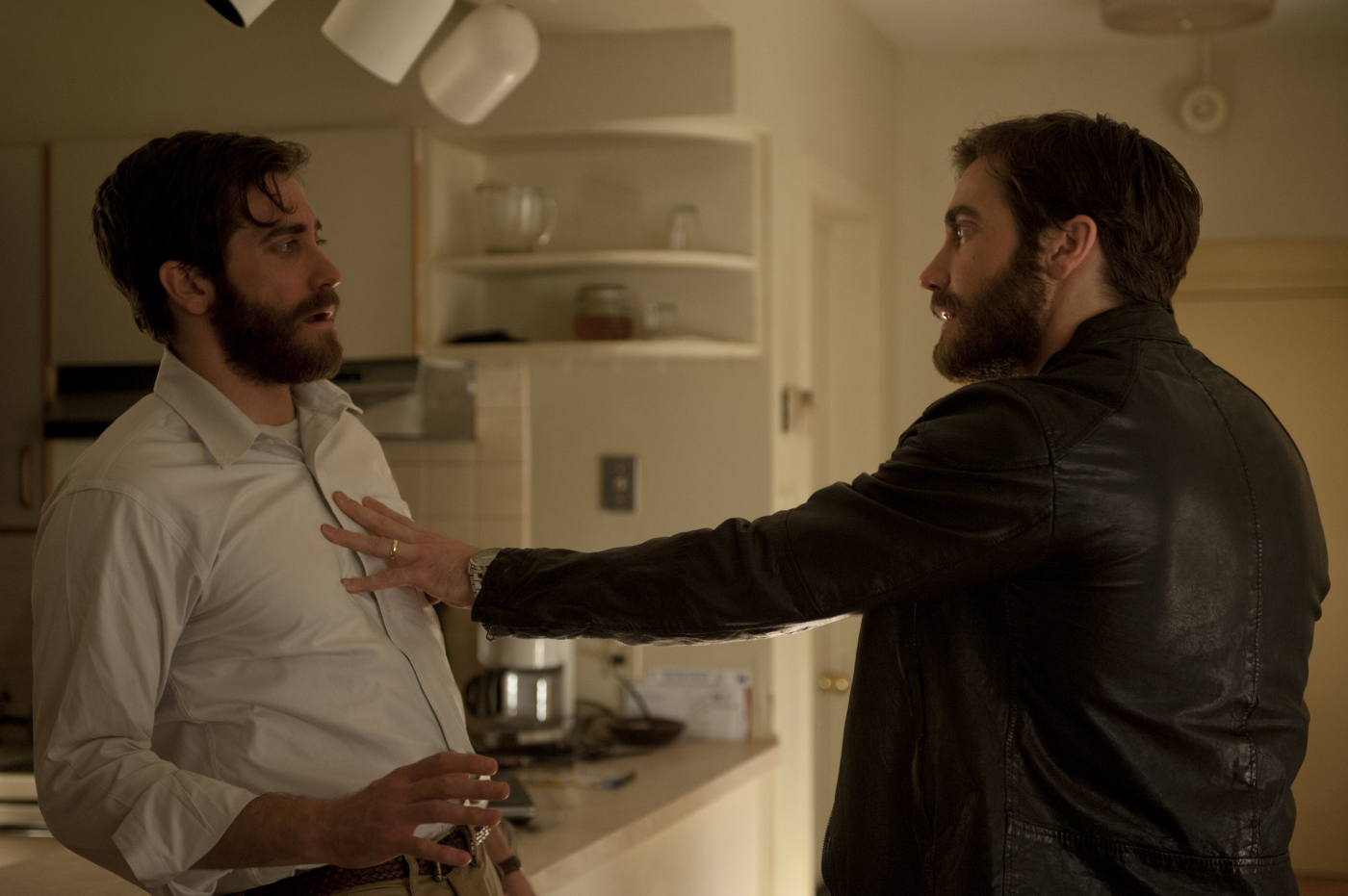
I read that shortly after I’d watched the film, and struck by how spot on it was I felt it would only add insult to injury if I were to try and nutshell the film myself. But the synopsis alone – whilst certainly nailing the tone of the film – doesn’t expand on the plot. That being said, I’m not sure if I can even do that; sitting alongside Under the Skin in the category of beautifully-shot, artfully-crafted musings on fear and isolation that don’t necessarily have a straightforward narrative for the viewer to latch onto, Enemy is a hypnotic and disturbing slice of sci-fi masquerading as a two-man character study. It just so happens that the two men in question are both played by Jake Gyllenhaal. And no, they’re not two different people – they’re exact duplicates.

Denis Villeneuve’s last effort, the surprisingly excellent Prisoners (surprising because it looked to be every inch the ITV serial crime drama, excellent because of its emotional wallop and its stark, beige-hued beauty), is a far cry from Enemy. It’s still unreleased in this country, and it’s not too hard to see why – an incredibly difficult sell lies ahead for whoever picks it up, the film straddling several genres in an attempt to seemingly evade capture by any major international distributor (it’s only been released in Canada and Spain thus far). That said, with the aforementioned Under the Skin proving there is more than enough room at the inn for narratively disparate yet hypnotically beautiful cinema (by the end of its two-week run queues were forming out the door at my arthouse cinema of choice), it’s a shame no-one’s yet been willing to take a risk with Enemy. But for now, let’s deal with the plot (or at least the basics of it).

Gyllenhaal is Adam, a lonely yet over-sexed thirtysomething; bookish, boorish and seemingly frustrated with his middle-class lot – university lecturing, looking overwrought, and boffing his beautiful but detached girlfriend (Melanie Laurent). But Gyllenhaal is also Anthony – a confident, sexually-aggressive actor who Adam spies in a film recommended to him by a fellow lecturer. Rewinding the DVD (unsettlingly placed within the film at full frame, Caché-style, an open invitation for the viewer to start questioning the reality of what they’re actually seeing) Adam Googles the actor to find his contact details, the culmination of which being a nervous phonecall when he realises they really ARE the same, right down to their voice. Pushing things a little further they both decide to meet up, only for Anthony to question if Adam has a scar on his chest. It’s never shown, but we assume from his reaction he does – his world understandably unraveling at rapid pace. It’s at this point that Enemy, for better or for worse, leaves itself open to a myriad interpretations.

Let’s go back to that opening quote for a minute. The Malick references are there, not least in the sweeping skyline shots juxtaposed with intimate close-ups on the duelling protagonists. Only in these skylines, instead of Malick-friendly ‘golden hour’ sunrises, we see gigantic freak-limbed spiders surveying the city denizens below (hence the Twilight Zone hollers). The Cronenberg touch can be found in both of the above, sci-fi and horror clashing with the domestic and the mundane; while Enemy could never be classed as a horror, it certainly waves a few red flags for the viewer to expect something shocking around the corner (let’s not spoil the ending too much, now). And for a third time in one review I’ll thrown in Under the Skin as the most recent of comparable features, a film that dares to raise more questions than it could ever possibly give answers to. Enemy needles the viewer into thinking about life, the universe and everything – but specifically aliens, the possibility that they could already be among us, and just what we might do if we knew about it (hang on, isn’t that the plot of John Carpenter’s They Live…? Come to think of it, whatever happened to Rowdy Roddy Piper?).

It’s a far from perfect film, but at a relatively brisk 90 minutes it certainly doesn’t ask too much of its captive audience, except for them to engage in a post-film discussion in a public house of their choice. Which is sadly more than can be said for, say, Ayoade’s The Double, a film which deals with much the same subject matter but cleaves far too close to its Gilliam-aping style to really warrant an after-show debate. This is what makes Enemy such an interesting proposition – not that it’s an easy watch (it’s not), but I’d much rather a film of this type throw caution to the wind and go for broke than take the easy route. Far too often I’ve found myself skimming through my film collection wondering what I should watch – the undemanding blockbuster, or something more nourishing… I’ll be honest, most of the time neither option seems appealing (saturation point has a lot to answer for). But Enemy sets itself firmly in the latter camp, and if you’re prepared for a twisted, malevolent, witch’s brew of a film, then you certainly won’t regret seeing it on the big screen when a distributor with some balls steps up to the plate. 

Available on Region A Blu-Ray