Sunday, 14 June 2015

Jurassic World

Let's begin with a reality check: when the first Jurassic World trailer appeared online last November, I was apprehensive. Excited yes, but the rather cheap look to certain proceedings didn't fill me with hope for what had already become a franchise with 'generic' written all over it. I may have a minor soft spot for the B-movie charms of Jurassic Park III, but only a lunatic would hold it in high regard.

Much like JJ Abrams' toe-dip into the Star Wars universe brings with it a weight of expectation to right the wrongs of George Lucas's lukewarm prequel trilogy, the unveiling of a new Jurassic film was, if nothing else, a chance for the virtually unknown Colin Trevorrow (Safety Not Guaranteed) to offer up the sequel that Speilberg's masterpiece (and it is a masterpiece) has long deserved.

But sequels can be tricky at the best of times. By his own admission, Speilberg's The Lost World is inferior in almost every way. That's not to say there's no fun to be had with what's on offer - the clifftop truck-dangle is a masterclass in Hitchcockian suspense, with its single pane of slowly cracking glass - but taken as a whole, it's a messy beast. The elegant simplicity of 1993's Jurassic Park was a tough act to follow: a touchstone of 90s action cinema with effects that truly were revolutionary (the dinosaurs were originally planned to be stop-motion, until at the 11th hour advances in CGI changed filmmaking forever). The Lost World wraps interesting ideas in a somewhat darker-hued husk, with largely by-the-numbers action replacing the original's jaw-dropping set pieces; a noble misfire from Spielberg's usually on-target canon.

By the time the third picture came around, the excitement may well have been still there - but replacing Spielberg at the helm was Joe Johnston. With only the Pteranodon adding a sense of 'new dino' excitement to proceedings (the rather pitiful Spinosaurus proving you just can't beat a good old T-Rex) it again had moments of fun but largely felt like a cash-in vehicle, both for its stars (William H. Macy readily admits he did it for the money) and for the brand as a whole. In the same way that The Godfather Part III sullied a critically spectacular legacy (though I've never liked any of them - go on, sue me), Johnston's third entry placed a headstone on top of the grave the second film had started to dig for the franchise.

Risky shoes to fill? Definitely. But Trevorrow may well have pulled off some astoundingly deft cinematic sleight-of-hand; 14 years after the trilogy's ungainly demise, he's both reinvigorated all things Jurassic whilst - in many ways - remaking the first film. I know, I know - bear with me. To rebuild something that has become beloved for a generation in the same way that Star Wars and Raiders were for their respective audiences could be tantamount to sacrilege. But it's testament to Trevorrow's decision to focus on story and character - no matter how thinly-scripted - with the dinosaur action filling in the gaps, that Jurassic World stands on its own two feet while doffing a Hammond-shaped panama hat to the 22yr-old original.

The teaser and subsequent trailers have actually been red herrings, to this reviewers' eyes at least. Some poorly-rendered CGI and dino-attack money shots are entirely different in the finished film (as Trevorrow had promised), giving rise to the passing thought "did they deliberately make the trailers a bit shonky to lower expectations?". No matter, because Jurassic World delivers solid action, comedy asides, stock characters with neat twists and a whole new raft of dinosaur chaos that works on both a nostalgic level (for those of a certain age) and for an entirely new audience. Put it this way, you don't have to get a kick from seeing the remnants of the 'When Dionsaurs Ruled the Earth' banner to enjoy this film. But your heart may sink a little when one of the characters sets it alight to use as a makeshift torch. He'd have made a fortune with it on eBay, the fool.

To take us back to Isla Nublar, we follow brothers Zach and Gray Mitchell (Nick Robinson and Ty Simpkins, elder and younger respectively) as they visit the now functioning theme park to see their aunt Claire (Bryce Dallas Howard), operations manager at the park, who has a nice line in immaculate white clothing you KNOW is going to be John McClane'd come the film's conclusion. Claire Dearing is no John Hammond, but two nephews visiting a park to see a rich relation dressed in white? Definitely familiar. As is Chris Pratt as Owen Grady, a kind of younger, spunkier Robert Muldoon, who has upgraded his skillset from velociraptor handling to velociraptor training (not so daft when you consider the wealth of trained ferocious animals that populate zoos and circuses the world over). Hand-picked by the park's owner to inspect a new enclosure built to contain a genetically-modified hybrid dinosaur known as Indominous Rex (basically a big bastard with too many teeth), it's not long before the beast shows off some hitherto unknown capabilities they seemingly didn't notice when it was growing up; it escapes, and shit hits fans at gale force.

Cue a few familiar tropes: InGen are still around (this time headed up by a distasteful Vincent D'Onofrio), a company ever-ready to fuck things up at the point you think things can't get any more fuck-up-able; the two kids survive scenarios that would have resulted in death for 99% of other peeps their age; a fraught romance between the two leads simmers without boiling over.

The action is big and bombastic without being absurd, carefully running the 'darker, scarier' route of a family film that The Lost World struggled with (a stunningly-staged death-by-Pterodactyl/Mosasaurus attack is a welcome blast of real terror). The stirring John Williams themes are also present and correct, but not free to run rampant. It's a film that respects its origins and is reverent to them, without being slavish or overbearing (you'll find no Alan Grant or Ian Malcolm here, except maybe on the back of a book if your eyes are quick enough).

Making this fourth film seem fresh was seemingly the impossible task that saw it languish in development hell for over ten years. Hence Trevorrow's decision to basically rewrite the first film as an open operational park, as opposed to one with a giant 'opening soon' banner strapped across its gates. Whether that translates into 'fresh' or not is up for debate, but it undeniably injects a sense of spirit and wonder into a franchise that had become a shadow of its former roaring self.

It's far from a film that reinvents the wheel - though in some ways you could say that's exactly what it is doing, reinterpreting a classic for a whole new audience without alienating those who made it a success in the first place. In a world of safe bets - often Marvel-shaped these days, Ant-Man and Fantastic Four looking about as safe and factory-churned as cinema can get - it's nice to see a blockbuster handled with due care and attention; doing nothing out of the ordinary, but neatly sidestepping the one-size-fits-all approach that Marvel appear to have constructed for themselves in their endless quest for multiplex domination.

Final thought: I never thought a Jurassic Park film would make me want to cuddle a raptor come the final scenes. For that feat alone, Jurassic World is worth the price of admission.

Friday, 20 February 2015

Griffin Dunne on making An American Werewolf in London

First published on Northern Soul, Feb 2015

For better or worse, horror films are a dietary staple for many kids. Whether you’ve been scarred for life by Jaws or so enamoured with The Exorcist that you’ve clamoured for more, they trigger a response in a viewer unlike any other genre. 

But some directors follow a different path. When director John Landis unleashed An American Werewolf in London in 1981, its carefully blended mixture of horror and comedy was unprecedented. Critics and audiences alike had become accustomed to genres more or less keeping themselves to themselves, save for such films as Young Frankenstein and Carry On Screaming! – more parodies than genre-benders. The response to Werewolf was lukewarm at best. As Roger Ebert put it, “the laughs and the blood coexist very uneasily in this film”. Well, time is a great healer. 

Werewolf is now rightfully revered as a cult classic, not least because of the performances of its two leads – David Naughton (as his namesake’s lycanthrope attack survivor) and Griffin Dunne as Jack, David’s best friend who is clawed to shreds at the hands of East Proctor’s fevered beast, returning at key moments in various stages of physical decay urging David to take his own life. Morbid? Yes. Funny? Most definitely. Dunne, long since an established filmmaker in his own right, believes that Landis created something unique.

“I think John was really the first to bring humour and horror together,” he told Northern Soul. “It’s something that was done on a much bigger scale by Ghostbusters, but it’s part of the diet of just about every horror movie that it’ll have a grim macabre joke in it somewhere, and I give John credit for that. When it came out that technique wasn’t hailed as ground-breaking, the majority of comments were actually pretty negative. You know, ‘pick a genre, you can’t be funny when somebody’s being mauled to death’. Well, it turns out you can. Many filmmakers have gone on to prove just that.”

Dunne was a sprightly 25 when he got the part of Jack, flying into a then recession-battered Britain via Concorde.

“It was an odd time to be so ecstatic about being in a movie, England was going through a very difficult time economically.”

The way he landed the part was far from straightforward.

“I met with John in an audition room with many other actors, and we talked for about ten minutes,” Dunne recalls. “Nothing particularly leapt out at me about the conversation. I thought because I didn’t read or audition he didn’t want me, and I was kind of relieved. I’ve always been terrible at auditioning, I’ve got dyslexia and it’s difficult to read off the page cold. So I was completely surprised when he called me.

“He said he was sending by a guy with the script to my apartment, and if I was interested in doing it I had to read the script while the guy stood in my hallway, then hand back the script. I like all that cloak and dagger stuff, and I found the script hilarious. The only thing he asked me when we met, and he asked me several times, was if I was claustrophobic.”

The role proved to be a baptism of fire for what was Dunne’s first major feature film.

“It [the make-up] took over five hours every morning. I’d have to get up and sit in the chair at four o’clock in the morning to be on the set. My head was [first] encased in a plaster cast, just breathing through two little straws in my nose. Your life depends on these two little pieces of straw as it’s being put on, inch by inch, millimetre by millimetre. It’s very painstaking, but having it taken off was just as torturous as having it put on. It was like being nibbled to death by ducks.”

Those 4am make-up calls – not to mention the resultant ‘undead’ appearances for which special effects artist Rick Baker won an Academy Award – had a profound effect on Dunne’s emotional state.

Rick Baker working on Griffin Dunne “It was a realistic depiction of how I would look if I was dead and rotting. Which is interesting as an audience member, but when you’re looking at your own mortality, it affects your mood.”
Combined with the realisation that his final scenes were to be ‘acted’ by an animatronic puppet to realistically depict his disintegrating corpse, Dunne felt the need to step in and take control of his performance.

“I was threatened by man and machine, it’s an age-old conflict,” he says. “I wasn’t prepared for it. I saw somebody manipulating the hands and I said ‘that’s not even like how I move’, so they said ‘well, you do it’, so I did. It made me feel part of it.”

However, when it came to Oscar night, Dunne couldn’t have been happier for Baker, whose award for Best Makeup and Hairstyling was the first of its kind to be recognised by the Academy (to date, Baker has received the most awards and the most nominations for this category).

Rick Baker and Griffin Dunne“I was thrilled he won, but even more thrilled to hear my name mentioned. It was a heady moment by association. When something happens on a global event like that, just by sheer association with your name being mentioned, your phone rings off the hook as if you won the award.” 

Regardless of any acclaim it may have sidestepped back in 1981, Werewolf has gone on to be regarded as a flat-out boundary-pusher within the horror canon. Rather than tread water and trot out what was expected of him, Landis gave the audience a different kind of animal to chew on. Dunne acknowledges that such critical thinking wasn’t really part of the horror genre at the time of Werewolf’s release.

“I don’t think there was the thinking of horror as a genre as worthy as all the others and having an intense fan-base who are not only horror fans but cinephiles, who recognise every reference to every movie and can draw these critical anthropological charts of how people look at movies. If that world existed when I was making Werewolf or when it came out, I certainly wasn’t aware of it. I think it’s grown and grown and grown.”

An American Werewolf in LondonAs positive critical opinion of the genre has blossomed along with the film’s acclaim, so has Dunne’s appreciation for it. With many actors often dismissive of their work once it’s committed to film (Johnny Depp revealed to David Letterman in 2009 that “once my job is done on a film, it’s really none of my business. I stay as far away as I possibly can”), it’s refreshing to know that’s not the case for Dunne.

“I see why it deserves the attention and holds up in people’s memories 35 years later. I think for its innovation, not technologically but story-wise, it’s something you appreciate even more with the passage of time. Any time you get to be part of something that is culturally iconic that’s going to go on for years and years, that’s a big deal in anyone’s life. I’m very lucky and proud of that movie.”

Having worked his way through the ranks of Hollywood as an actor via the likes of Martin Scorsese (After Hours), James Foley (Who’s That Girl) and Robert Redford (Quiz Show), all the while producing features of his own, Dunne made the move into directing.

“Both Landis and Marty are very energetic people, and that energy is very contagious,” he says. “There’s no lagging, you’re not aware of time, you’re not aware of worry and neuroses; it’s an atmosphere of trust between director and actor. It’s an environment [as a director] I always try to find. I remember as an actor always doing my best work for directors who took that on.”

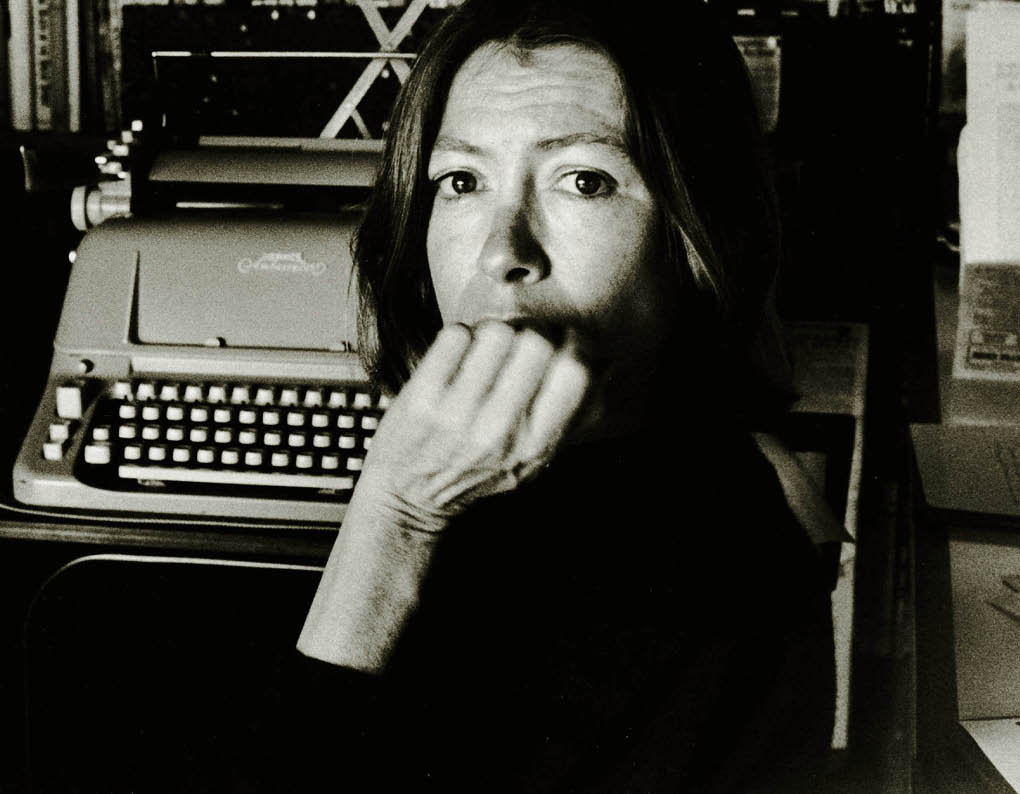
After toying with big budgets (Practical Magic), independents (Fierce People) and anthologies (Movie 43), Dunne is now on course to make a personal documentary about his aunt, acclaimed writer Joan Didion. Suitably encouraged by a Kickstarter fundraising campaign, it’s a long-gestating passion project that he’s hoping will speak for itself.

“I’ve been very fortunate to have gotten so much positive response as well as money from the Kickstarter that right now I’m just focusing on making the best movie that I can, both for my aunt and all of her fans. I think that rather than talk about it I’m gonna do it.”

As for crowdfunding, Dunne is clearly grateful but cautious about how it could change the way films are produced.

“You’ll never get an offer like you will from a big studio, but it’s something that’ll apply to certain projects. Even for a documentary about a prominent literary figure, as much money as we did get, it’s still not enough to make an entire movie. But you have proof for the people you’re going to for the next chunk of money that there’s without a doubt an audience for your film.”

For more information about Griffin Dunne’s Joan Didion documentary, go to didiondoc.com

Tuesday, 25 November 2014

Dawn of the Planet of the Apes

First published on Northern Soul, Nov 2014

There was a moment in Rupert Wyatt's 2011 reboot Rise of the Planet of the Apes that stopped the viewer in their tracks. A moment when a good film becomes a great one, a moment rarely seen in slam-bang, effects-driven blockbusters in these franchise-saturated times. Caesar's guttural cry of "NO!", symbolically breaking free of his simian roots to become more human than his caged compadres can comprehend, is a hairs-on-the-back-of-your-neck moment for any first-time viewer. Rise was a surprise hit, a film which didn't necessarily carry the weight of expectation that a usual studio tentpole does. The fact it turned out to be a grade-A action creature feature with (genetically-enhanced) brains came as a shock to most. The fact it also came pre-loaded with the scene described above to pin cinema audiences to their seats even more so.

Thus Matt Reeves' sequel, for better or for worse, had a weight of expectation resting on its furry shoulders that the first one never had - but to his credit, his film could yet be ranked alongside The Empire Strikes Back and The Dark Knight as the darker, superior picture. Time will tell of course, but as sequels go, Dawn joyously throws out the 'if it ain't broke, don't fix it' rule of thumb many studio executives cling to in a vain attempt to keep the coffers full. It sidesteps what could easily have been a giant, LOTR-aping two-hour warfest with thousands of Massive-driven humans and apes going hammer-and-tongs via epic CGI aerial shots, to become something far greater altogether.

If anything, Dawn follows in the footsteps of Full Metal Jacket in being a distinct film of two halves: a slow-burning, tension-building, character study of a first half that sets up complex motivations and divisions within both the human and ape camps; followed by a grim 'war is hell' second half, largely eschewing the predictable circling helicopter shots in favour of muscular, boots-on-the-ground close-ups that showcase the bleak realities of conflict. This may be a film full of computer-generated apes, but in lieu of recent ideological uprisings halfway around the world its message couldn't be more resonant.

It goes without saying that in order to fully appreciate what Reeves has done with Dawn, you need to have seen Rise. This isn't a film that spends much time with backstory, save for a brief newsreel montage explaining that the world has gone to hell in a handcart over the course of ten years due to a killer virus known as the 'simian flu' (in reality, an intelligence-enhancing concoction initially trialled on apes as a cure for Alzheimer's - it worked wonders for the apes, not so much for the humans).

Said humans (led by the ever-watchable Gary Oldman) are now living in what appears to be a San Francisco tribute to The Last of Us - giant vines crawling skyscrapers, the Golden Gate bridge a hot mess of weeds and abandoned cars. After a party of humans in search of a dam that could restore power to the city stumble across Caesar and his pals, a fractious alliance is forged by Caesar to allow the humans to restore power on the apes' turf. But Koba, Caesar's hot-headed second-in-command, has a deep-seated mistrust of humans (again, if you haven't seen the first film, get a watchin' it now). His justifiably warped views lead him to find the rest of the human race stocking up on weaponry in case the whole fragile pact goes belly-up... and belly-up it goes. But not necessarily at the hands of us pesky humans; as Caesar tells his son with a heavy heart, apes and humans are so very much alike.

Around the halfway point, in what could be viewed as an attempt to out-do the "NO!" moment from Rise, Reeves places a camera on top of a tank when the humans vs. apes battle starts to kick off big time. Without cutting away, the turret slowly spins as all hell breaks loose, the lens acting like a first-person-shooter voyeur surveying the fire-engulfed chaos with Koba at the centre. It's a simple but jaw-droppingly effective moment that separates Dawn from your typical Hollywood output, a film that feels truly and artfully crafted rather than churned out off the back of a surprise success to make a quick buck.

Even the fact that the majority of the apes' dialogue is done via sign language and subtitles shows that this franchise is in it for the long game - Nolan's Dark Knight trilogy proved that you don't have to whack an audience over the head with dumb dialogue and huge explosions every five seconds to keep their attention when it comes to a summer genre release. Reeves has taken the gauntlet laid down by Wyatt to make a film that's both action-packed and thought-provoking. It's about as brave a blockbuster as you're likely to see in this attention-deficit age.

Available now on Blu-Ray and DVD

Monday, 24 November 2014

Interstellar

"Some kind of great film, and an unforgettable endeavor."
"A monumentally unimaginative movie."
"Succeeds magnificently on a cosmic scale."
"Morally pretentious, intellectually obscure and inordinately long... a film out of control."

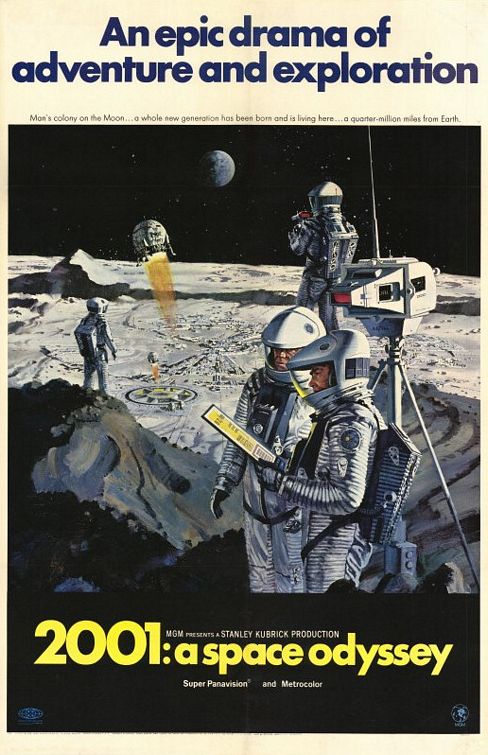
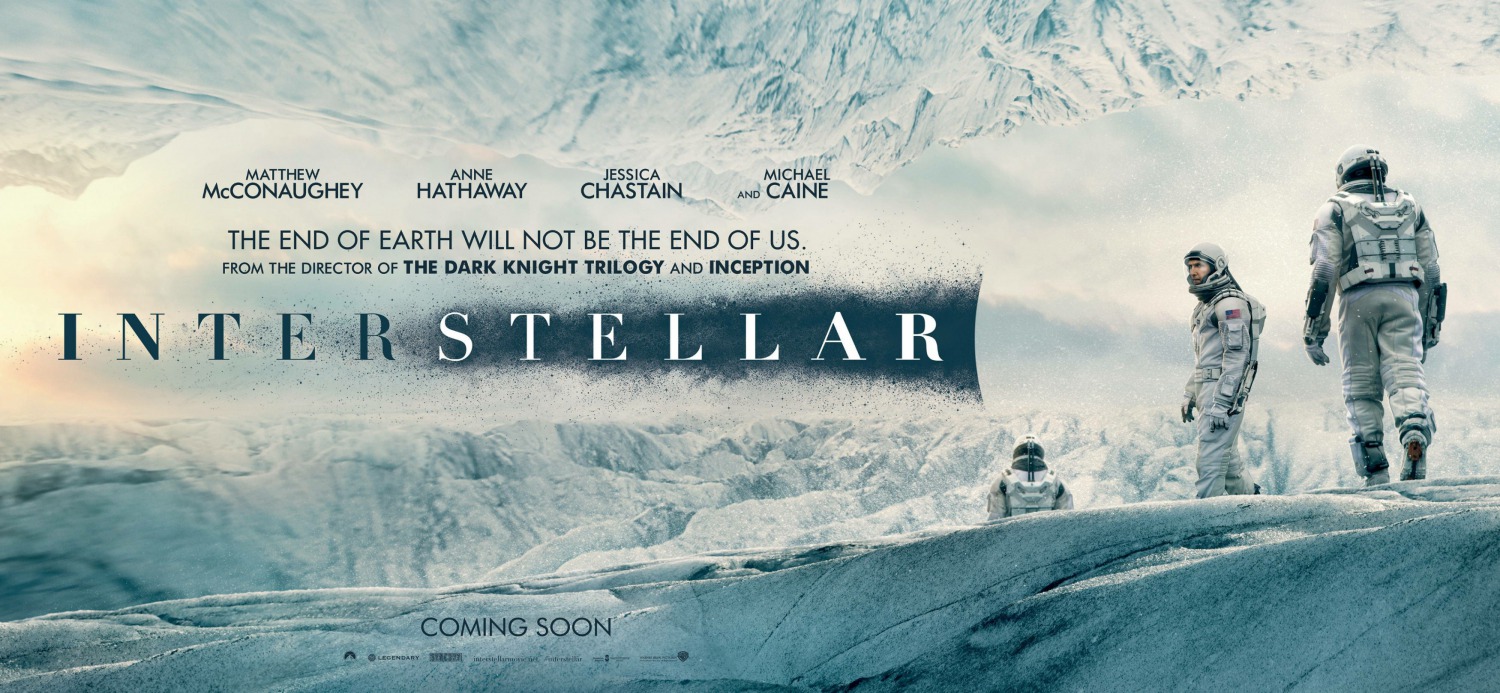
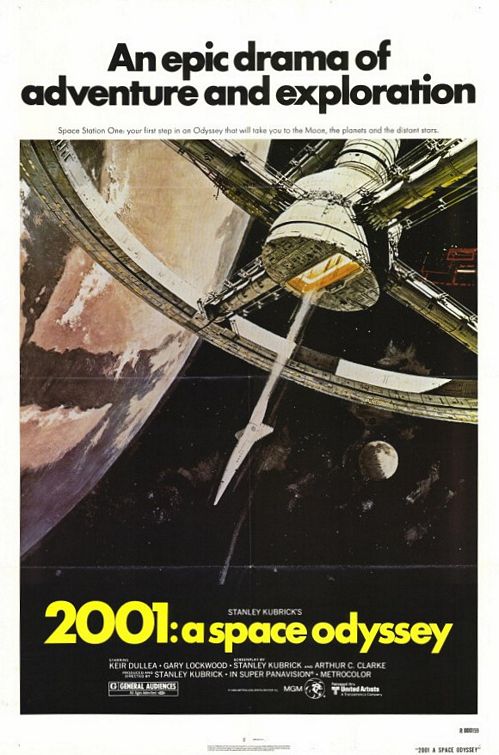
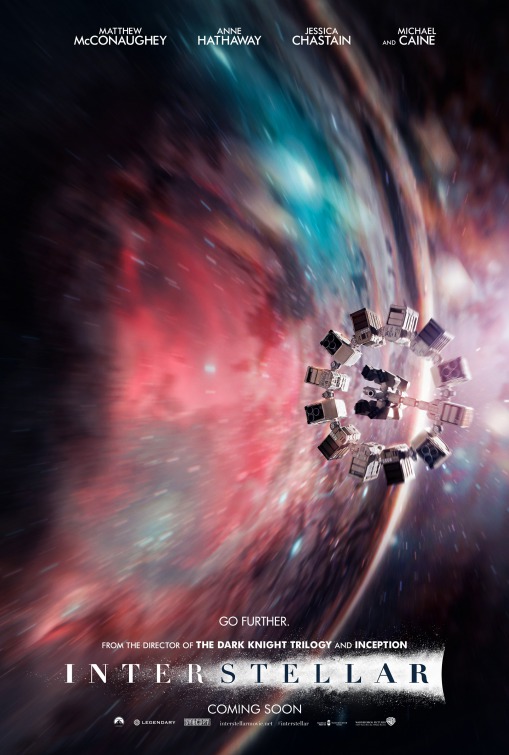
Some criticism for you to chew over there, praise of both the highest and lowest order. Though it's not Interstellar they're talking about; rather Stanley Kubrick's 2001: A Space Odyssey, a film that polarised opinion when it hit screens in 1968. Nolan's film may not have had quite the impact 2001 had (audiences weren't quite so used to 'serious' effects-driven blockbusters at the time, let alone wide-eyed scientific musings on the nature of existence), but having taken in its IMAX-sized vision, it's easy to compare it to Kubrick's effort and indeed the confused reaction it elicited from audiences and critics alike (even the posters bear a striking resemblance here and here, oh and here and here too). There's a fine line between genius and madness; with Interstellar, its often hard to tell where that line actually is. But it's damn good fun trying to work it out.

Whilst marketed as a typical tentpole picture, director Christopher Nolan (Inception, The Dark Knight) along with his screenwriter brother Jonah have concocted something far more ambitious. Too ambitious, some might say; but when every other film on release is a franchise or a cheap comedy to bulk up the studio numbers for the year, you can't knock the Nolans (no, not those Nolans) for attempting to do something a little more daring, even by their own lofty standards. It's a film that in some ways feels out of time, a throwback to the likes of 2001 but also other films from decades past (Philip Kaufman's The Right Stuff was screened to cast and crew prior to shooting, McConaughey's Cooper practically a visual carbon copy of Sam Shepard's Chuck Yeager). Methodical pacing and character building are rare things in many a movie these days, let alone a Nolan one; his passion for exposition often coming at the expense of getting to know who you're rooting for. But from its dust-bowl opening all the way to its gravity-warping finale, it wears its influences firmly on its sleeve whilst going places not every audience member may want to travel to. For those willing to be taken along for the ride however, it delivers thrills and food for metaphysical thought in spades.

Setting up camp in what we assume to be the not-too-distant future, the world has found itself in the middle of a food crisis - a world caked in dust with the remnants of the human race living a meagre existence. Cooper, an ex-NASA pilot turned farmer ('ex' because the space missions were shelved, perceived to be a waste of public money), stumbles on some strange goings-on in his daughter Murphy's bedroom; gravitational waves that appear to be coordinates to an undisclosed location (okay, it looks daft when written down like this and it doesn't make much more sense on screen, but bare with me). Taking a punt and driving to where the supposed coordinates point to, he discovers NASA themselves - in hiding but still operational, and in need of a pilot to scout out new habitable planets beyond our galaxy (it really is starting to read badly now all this). Not one to turn down an opportunity to save the human race, Cooper signs up without barely reading the spacecraft manual; Anne Hathaway (as straight-laced astronaut Brand) must've looked him up and down and said "yep, he's man enough for the job". She'd seen him in Sahara and knew he'd come up trumps.

Now while I did say character building was a part of Interstellar, you might not know it from the opening 40 minutes. But a strained relationship with his daughter (later played by Jessica Chastain, who he leaves behind to fly off in his shiny new rocket) casts an arc across the entire film, an arc that literally comes full circle by the time we reach the film's black hole-enveloped climax. It's a film that plays with notions of time, space and the spaces in-between space; Kubrick and Arthur C. Clarke toyed with such 'big ideas' in 2001 and Nolan does the same, pulling in theories about fifth dimensions and how time can speed up or slow down depending on gravity's pull (this is as true for real life astronauts as it is for Cooper and Brand, who at one point return to their mothership to find their crewmate having aged 23 years in three hours).

While much has been made of the dialogue being muffled at times, it's to Nolan's credit that he has made such an artistic decision in order to take the audience on a journey with the characters, for us to experience what they experience, to not to have everything spelled out in black and white on the biggest canvas possible. It takes tricksy science-fact and blurs it with theoretical science fiction, throwing in a huge measure of sentiment in an attempt to pull the whole thing together. Though equally, it could also be argued that in trying to create what Kubrick once termed "the proverbial 'really good' science-fiction movie" he's been given as much rope as he likes by his friends at Warner Brothers, noble intentions turning bloated and indulgent through lack of self-editing. The same happened to Tarantino by the time he made Kill Bill; J.K. Rowling's Potter books became sprawling behemoths once she had more clout than the publishers themselves. Interstellar arguably treads similar ground, its reach/grasp ratio only serving to alienate audiences and confound critics.

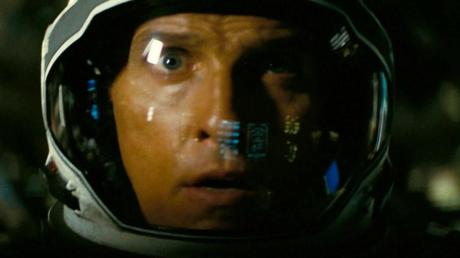
But this could be to miss the point. In dealing with such huge unknowns as wormholes, black holes and exactly what might happen when a tiny Matthew McConaughey gets trapped behind a giant five-dimensional bookcase, he's handing ownership of the film over to the viewer - it's for us to decide if he's failed or succeeded to entertain or inform. Like Kubrick and Clarke he's pondered the big questions, ending up not quite with an answer but with even more questions. Boiling it all down to 'love' may seem trite and almost throwaway, but in pondering the tangible nature of emotions and feelings that can stretch across time and space (steady on now) he's giving us the opportunity to consider new ways of thinking about our place in the universe. That's far more than what most films do, let alone a $165 million money-hoovering monster.

Interstellar is flawed, yes. But it's a film absolutely filled to the brim with moments of awe and wonder - not just in the visual sense (at Nolan's behest it's largely CGI-free, which beggars belief) but in the ideas it plays with, so much so that a second viewing is pretty much requisite. It demands your attention, it begs you to talk about it afterwards; throwaway entertainment this is not. It won't be to everyone's taste, but then again neither was 2001, nor The Right Stuff which bombed on initial release in 1983. Only time will tell if Interstellar can be held in the same high regard.

Monday, 10 November 2014

Gone Girl

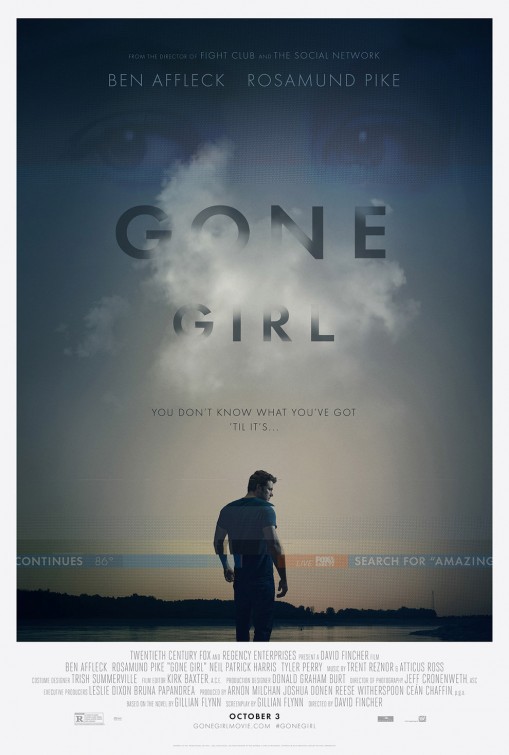
It was with a vague air of trepidation that myself and my good lady Claire entered the cinema to finally see Gone Girl, about a month after its initial release. You see, it was also about a month after putting up the film's poster in our bedroom, its blue-grey hues fitting perfectly with my better half's chosen colour scheme. This, as many of you will have no doubt already noticed, is a worrying prospect to be dealing with for the better part of thirty days. What if the film's shit? What if Fincher, having already (in my view) misfired on a number of recent occasions, has felt the need to throw another slice of unnecessary cinema our way? What then for the befram'd one-sheet, what then?! Certainly neither of us were going to have it hanging there like an unexpected wall-based piss stain any longer if the film didn't reach - nay, exceed - our lofty expectations. Thankfully, it did.

(I guess I could conclude this review now, all of you safe in the knowledge that it's a) good, and b) our wall remains satisfyingly geek-chic. But I'll elaborate regardless.)

Nick Dunne (Ben Affleck) wakes up the morning after 4th July celebrations to find his wife Amy (Rosamund Pike) gone (the clue's in the title - and in the date, if you want to be really clever). An established children's author, 'Amazing Amy' (coined after her semi-autobiographical creation) soon becomes the focus of a Police and media circus after Nick reports her missing. Though not before clues to her disappearance - both visual and literal - are laid out for the viewer and Nick to find: spatters of blood in an otherwise spotless kitchen; a strange air of detachment from Nick that the tabloid media soon pick up on; a blatant act of infidelity that suggests all was not quite so well at Chateau Dunne. But then again, neither Nick nor Amy are reliable narrators - both of them have things to hide, as so many of us do, whether we like to admit it or not. You can take it as read that there's more than a few narrative twists to be mined from both Nick and Amy's duplicitous ways.

In a way, Gone Girl could be deemed the ultimate date movie. A well-worn cliche and somewhat odd for a film that is arguably anti-marriage (or anti-relationship, or anti-ever-becoming-involved-with-anyone-in-any-capacity). But if you've ever felt the natural strains a relationship can place on a couple after any significant period of time, Gone Girl magnifies them to grand guignol proportions and throws them back in your face, jugular blood and all.

Any couple worth their salt will be able to appreciate how easily problems can escalate if they're not addressed, and as such revel in the delicious madness that slowly unravels as Gone Girl's protagonists ballet towards a beautifully twisted, self-inflicted conclusion. In the same way that Kubrick's Eyes Wide Shut plays with secrets, lies and all the grey areas in-between when it comes to middle-class monogamy, Gone Girl lays a potboiler narrative veneer over what is essentially a meticulous look at two people trying (and failing) to make a marriage work. One of them may or may not be a psychopath, but every long-term relationship has its issues, doesn't it?

Whilst there are never any 'OhMyGodThisFilmIsAmazing' moments, as there are arguably many of in Fincher's earlier work (it's virtually impossible to escape the long shadow cast by Seven and Fight Club), Gone Girl is a film that stays with you. It practically begs you to chew over what you've just seen, for it to overcome any perceived pulpy origins and blossom as the hours and days go by. It could easily be deemed throwaway, much like The Game and Panic Room in Fincher's oeuvre - Hitchcockian tribute acts that are expertly crafted but nothing more than candy floss fluff. Indeed there's more than a whiff of Hitchcock to Gone Girl, the devious nature of both men and women writ large on a silver screen canvas (Vertigo springs to mind, though that may be far too high a compliment).

But it's much, much more than the sum of its parts. Gillian Flynn's script adapted from her own novel is far cleverer than it first seems, lulling you into a false sense of vomit-inducing security that a whimsical, annoyingly cloying couple who have the cutest of meet-cutes (it is, quite literally, sugar-coated) could ever be hiding so many demons, right to the (very) bitter end. And in the same way that Eyes Wide Shut ends on an abrupt note, the camera focused tight on Nicole Kidman's face as she suggests her and Cruise "fuck" as a way to brush all their sins under the carpet, so too does Gone Girl - Rosamund Pike puts in a stellar performance throughout, but finishes proceedings off with a gaze aimed directly at the audience, leaving the story beautifully hanging in mid-air.

It was telling when someone behind me in the cinema quietly uttered "Oh" as the credits started to roll, neatly-packaged endings so commonplace that the very idea a story could be left unresolved being tantamount to lunacy. But all credit to Flynn and Fincher for pulling it off. And for allowing our poster to stay in place, of course. I'm sure they'll both be pleased.

Monday, 27 October 2014

Teenage Mutant Ninja Turtles (2014)

Okay, first and foremost, let's get this out of the way: I liked this film. Yes, you heard right - you'll get no high falutin' derisory cineaste sneering from this critic. No siree. In fact watching Teenage Mutant Ninja Turtles - the second attempt to reboot the franchise after the vaguely abortive TMNT in 2007 - made me re-appreciate the value of enjoying films in the company of others. God forbid I should combine film-watching with socialising, but it happened. And it wasn't such a bad thing after all.

I should point out that this 'watching films with other people' malarkey was largely due to the movie in question; coming under the banner of Michael Bay's sidearm Platinum Dunes, it was my friend Adele's voracity for anything Bayhem-tinged that crowbarred me into the cinema, much to my initial chagrin. Why weren't we going to see Gone Girl? Fury, per chance? Hell I'd even take The Maze Runner. But no, Turtles it was. The Transformers-lite teaser trailer had hit all the right buttons for her, and the lady wasn't for turning. Once the film got underway though, it would appear I was for turning.

Jonathan Liebesman's 2014 iteration is by no means a masterpiece, nor is it even great - but as an exercise in ticking the right boxes in the right order for what is essentially a big, goofy kids' film, it's pretty damn faultless. Compare it to The Amazing Spider-Man 2, for instance (which runs with a similar tone on almost double the budget), and it comes off like Renaissance art next to a panicked Etch-a-Sketch drawing. Yes it's silly. Yes it has its flaws. But it's got heart and it's got soul, and for a film that feels the need to awkwardly insert Victoria's Secret product placement into its end credit sequence for no discernible reason, that's high praise indeed.

Despite the basics of the plot being somewhat moot (mutated turtles, a mutated rat, blah blah etc etc), it does throw a few curveballs into the mix by way of having roving reporter April O'Neil (a surprisingly emotive Megan Fox) linked to their gestation/survival, her father being one of the geneticists behind their mutation. Of course he had a partner in kryme (I couldn't resist) with ulterior motives (William Fichtner), who's still pursuing said motives in a quest to ensnare the turtles for their mutated blood. I could go on but I'm boring myself writing this shit. In essence, it's a comic book plot with a kid-friendly bent, ridiculous but perfunctory with enough twists to keep the kids amused and the adults engaged (except for when Shredder says he wants to 'dine on turtle soup' - you'll roll your eyes, but give the film a break; it's for the kids, not for you).

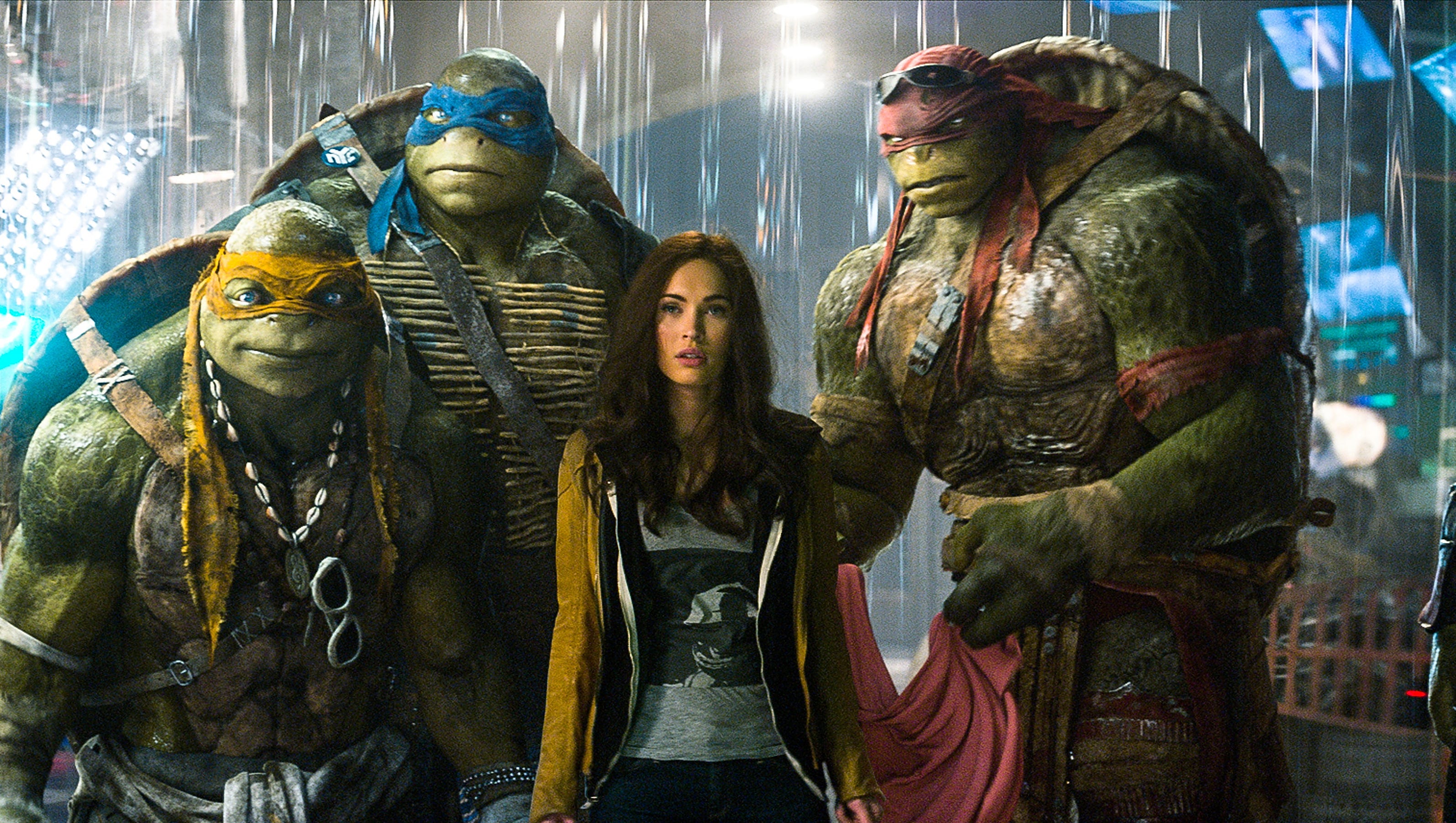
This kid-friendly charm extends beautifully to the turtles themselves, their newly-minted CGI incarnations proving to be characters you can emotionally invest in (that said, avert your eyes during their childhood training sequences - Michaelangelo (Noel Fisher) break-dancing to Hollaback Girl is THE scariest thing you'll see this year). They're akin to Bay's Transformers in that respect; no matter what you may think of the films themselves, it's hard to deny Bumblebee and Megatron have far more charisma than LaBeouf, Fox, Wahlberg et al. It's to Teenage Mutant Ninja Turtles' credit that Will Arnett (as O'Neil's trusty cameraman Vern Fenwick) manages to keep us interested in the human element as well as the CGI wizardry - well, just. None of the actors are stretched by any degree, but a few decent gags and a zingy (if slightly cringey) script keep things afloat, the pace never letting up but never getting too ahead of itself either. In an age where action films are seemingly vying for your attention at every spare moment, it's refreshing to see a film placing a modicum of emphasis on character development as well as the next explodey bit (though you may be surprised how few explosions there are for a Bay-produced film - hand-to-hand combat is the pizza order of the day here, though quite why Shredder had to be exo-skeletoned up to the tits is beyond me).

It should be easy to mock Teenage Mutant Ninja Turtles as many of the broadsheets already have, but I'm afraid I can't - when you've genuinely enjoyed yourself for an hour and a half, it'd be a betrayal to all involved if I was to scoff in its face, brushing it off as forgettable frippery. Though in some ways it is; this isn't a film trying to reinvent the wheel, in fact it's the umpteenth film to utilise the old "I'll infect the city with a virus because I'm evil and shit" gambit, so much so that we spent a fair chunk of time after the screening thinking how many other recent films have used it as their MacGuffin (X-Men, Batman Begins, The Amazing Spider-Man - do send other answers in on a postcard, please). But its potential forgetability is routinely saved by the chemistry between the four green leads, each of them so solidly defined in their predetermined roles (the leader, the loose cannon, the science geek, the comic relief) that you remember why everyone had their favourite growing up. They're designed to let children see part of themselves in each of them, children both big and little... I know I know, this all sounds suspiciously rose-tinted. Fuck it, it probably is. But Teenage Mutant Ninja Turtles has, for this critic, breathed fresh life into a franchise that never got the chance it deserved first time around. Leave your cynicism at the door and enjoy the ride - you might not love it, but you'll be hard-pressed to say you weren't entertained. And that's good enough for my money.

Monday, 20 October 2014

Peaches Christ's Bearbarella

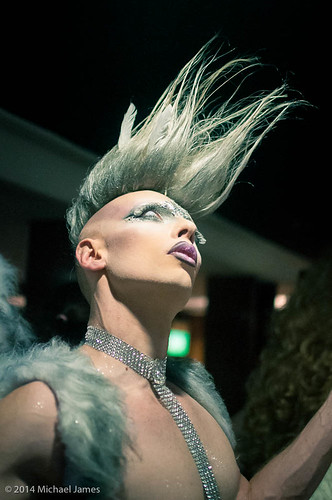
Not for the first time in my life, I was surrounded by scantily-clad males; their thick make-up, pore-clogging body glitter and intimately-placed microphone packs forming the apex of my evening. With my miner’s headlamp turned on full, foraging under the immense wig of Lady Bear herself, my shaking fingers desperately fondling the thin stem of her headworn mic in a vain attempt to get it to clip around her ear, I paused for a moment to consider the words of David Byrne: how did I get here? My God, what have I done?!

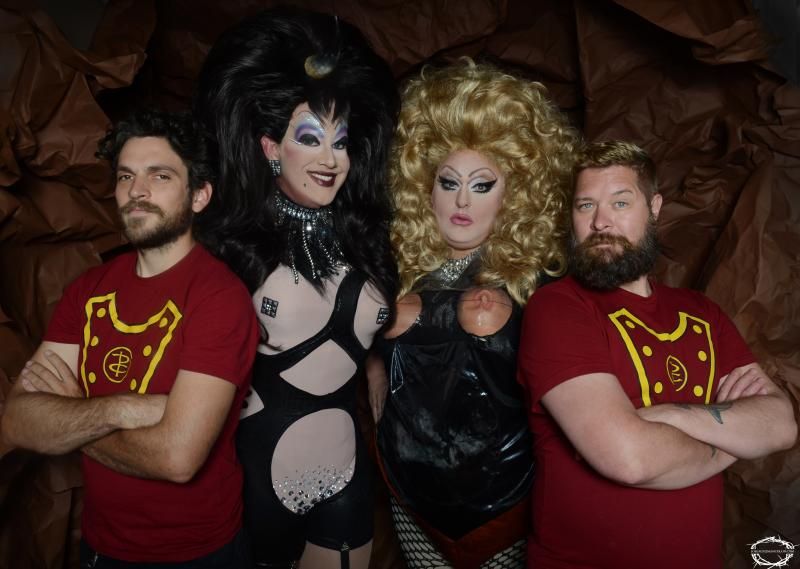
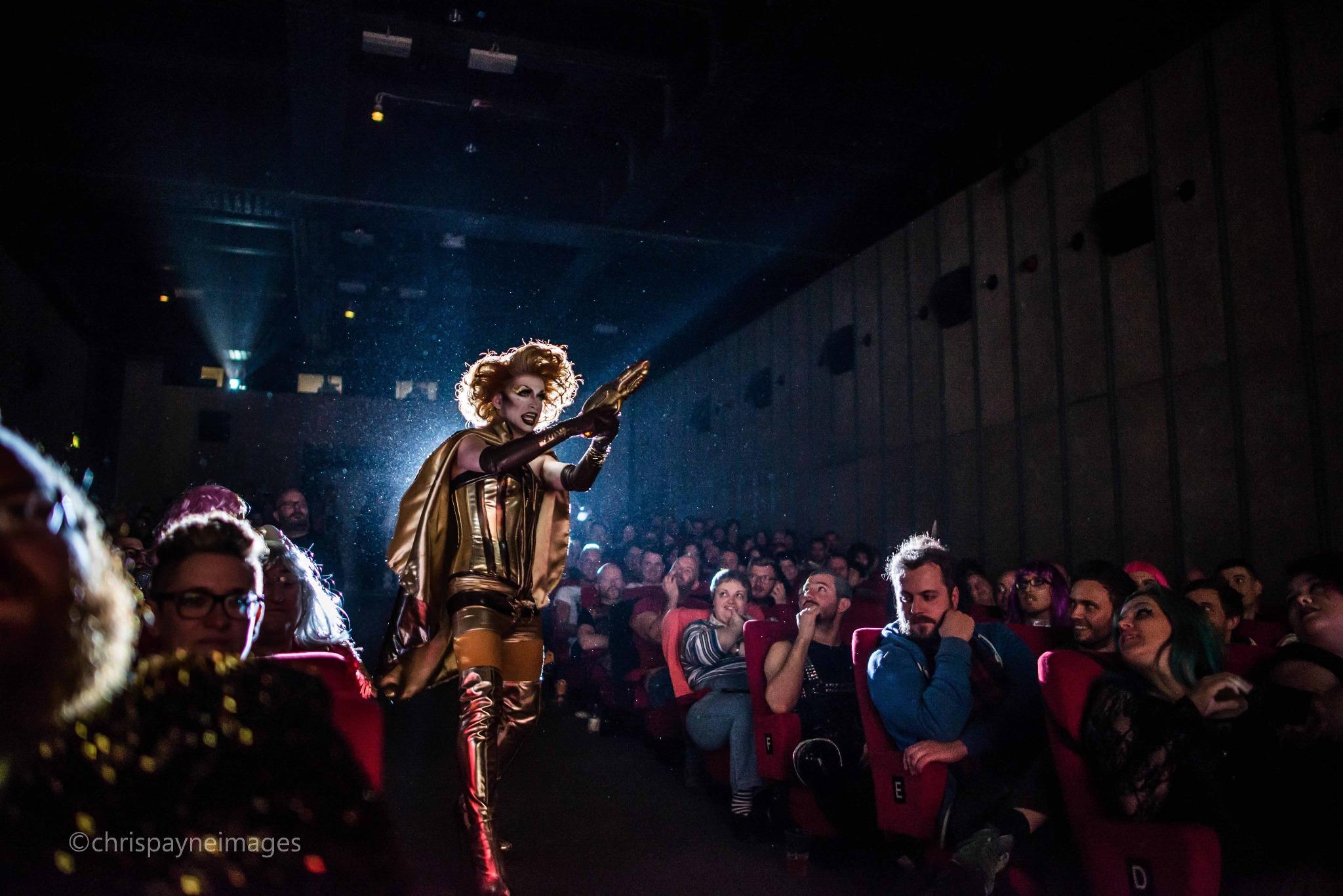
Such was my Saturday evening on the 11th October in the Year of Our Lord Twenty-Fourteen. I wasn’t in the bowels of a Canal Street flesh pit, nor off on a whistlestop tour of London’s Torture Garden; I was lost in the green room for the Manchester finale of Peaches Christ’s Bearbarella, a bespoke theatrical cinema performance taking cues from Roger Vadim’s Barbarella, her one-hour pre-show taking a captive audience to new highs (and lows) of camp excess before a screening of Vadim’s insane 60s sci-fi spectacular. And as already noted, this was the second time I’d worked with the legendary San Francisco drag queen – otherwise known as Joshua Granell – armed with her cohorts Hugz Bunny (Ric Ray) and Shemantha (Sam Sharkey) under the production steerage of Bren O’Callaghan, a man so passionate about the project that he battled influenza for the entire three-date tour (both Belfast and Glasgow bore a brute force attack from the be-Barbed Christmistress) before allegedly collapsing in a doctor’s surgery minutes after the wrap party. He hasn’t been back to work since. Drama queen, much?

It’s inspiring in many ways that Cornerhouse – ever the bastion of chin-stroking director Q&As and gallery exhibitions that by their very nature can struggle to find an audience – can still put on a show like this without batting a fake-lashed eyelid. Coming under the banner of the BFI’s Sci-Fi: Days of Fear and Wonder season, it was in many ways a ridiculous show that outstripped its predecessor, 2010’s Midnight Mass, for sheer filth and debauchery. But when paired with the film, it all slotted into place; Vadim’s absurd but visionary sexual adventure is in many ways sillier than the pre-show that came before it, its high camp values a perfect match for the performance that Peaches and Co. brought to the stage.

An array of superbly-outfitted Manchester drag queens filled out the cast of characters, from the blind angel Go-Girl (Cheddar Gawjus) to the lamé-caped Dildongo (Anna Phylactic), all expertly choreographed by the Ultra Violets. To see all this unfold from my vantage point behind the mixing desk, headlamp’d up to the nines, adjusting mic levels under the watchful eye of señor Sharkey (a man who could well be considered the ultimate calm at the centre of a very crazy storm) was nothing if not a pleasure. Any nerves I had dissipated as soon as the curtain came up on Peaches, her fierce opening song kicking off a succession of equally fierce lip-synced numbers, strung together by the lurid sexual exploits of Lady Bear (whose real name remains a deliberate mystery). There was even time for some audience participation in the form of The Orgasmatron Challenge, though I guess the less said about that the better; what happens with Peaches, stays with Peaches.

Whether it be for Cornerhouse, Abandon Normal Devices or for HOME in 2015, working on these insane events is one of the reasons I love my day job. Unplanned emergencies, such as getting stage lighting to work with less than three hours to go until showtime, are all part of the fun; any stress falls by the wayside when you see a 300-strong audience from a myriad catchment zones having an absolute ball on your watch. Gushing my words may be, but for good reason – I loved it. And I’ll shout it from the roof of my blog for all to hear.

Long live Peaches. x